|
Getting your Trinity Audio player ready…
|
Why this Matters
Canadian agriculture is at a crossroads. AI tools like Farmer Chat, AgPal, and Roots are revolutionizing advisory services worldwide, offering real-time, data-driven insights to farmers. These technologies promise higher productivity, competitiveness, and profitability. But here’s the catch: Canada is lagging in adoption. Why? Because innovation isn’t just about tech; it’s about systems, trust, and collaboration.
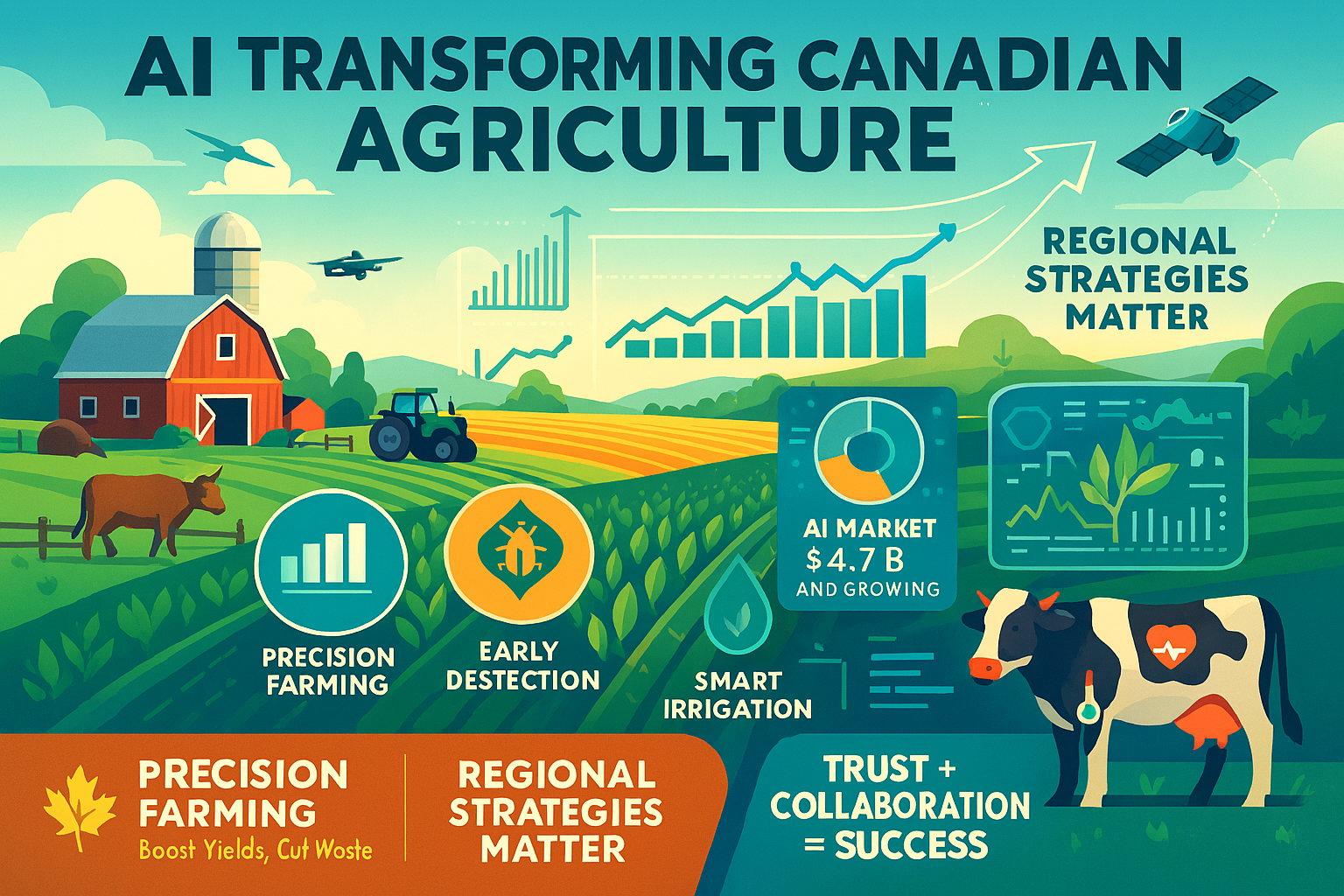
AI is totally shaking things up in farming these days. It is turning farms into smart, data-driven operations. For example, sensors in the soil track moisture, nutrients, and pH, while drones and satellites snap high‑res pics of fields. AI crunches all that and tells farmers exactly where to water, fertilize, or check for issues, right down to a few square meters, saving resources and boosting yields.
One of the biggest wins is early disease and pest detection. AI-powered drones scan crops, and computer vision spots yellow rust, blight, or weird discoloration before humans even notice. That means farmers can act fast, avoid losses, and cut down on pesticides.
Then there’s smart irrigation: AI systems like CropX adjust watering in real-time based on soil moisture and weather, often reducing water use by up to 50%. Beyond crops, AI is also making waves in livestock – tracking animal health through sensors and cameras to catch problems like mastitis before they spread.
Overall, over 60% of large farms now use precision AI tools, and the AI‑in‑ag market is booming, valued at around $4.7 billion in 2024 and set to grow rapidly. So yeah, AI is a practical game‑changer that can help farmers grow more food with less waste, which we urgently need to feed a growing world population.
The Opportunities
AI-powered tools can:
- Simplify complex science into actionable advice.
- Deliver personalized, location-specific recommendations.
- Strengthen farmers’ ability to innovate and thrive.
But they’re not magic bullets. AI still needs human oversight to avoid misinformation and bias. Think of AI as a powerful assistant, not a solo advisor.
The Challenges
Despite the hype, the adoption of new and improved technologies faces several challenges. In a two-year study (2021 to 2023) that I led at the research institute I direct, our research team examined the challenges associated with the adoption of automation and robotics technologies in Ontario. For AI across Canada, adoption faces four big roadblocks:
- Information Gap – Farmers often don’t know what tech is out there.
- Integration Confusion – Even when they do, they’re unsure how to fit it into existing systems.
- Fragmented Innovation Networks – Research centers and tech providers work in silos.
- Weak Support Systems – Poor coordination across regional agri-food supply chains.
These aren’t just tech problems – they’re systemic issues. Agriculture is a complex socio-technical system, and fixing it requires collaboration across government, industry, and research.
What Needs to Happen
We need to develop research frameworks that view agriculture through the lens of Innovation Systems framework. This simply means seeing agriculture as a network of:
- Knowledge Producers (such as universities, labs)
- Knowledge Users (farmers, entrepreneurs, policymakers)
- Intermediary Institutions (brokers that connect the dots)
The innovation systems approach emphasizes regional embeddedness because what works in Quebec might flop in Saskatchewan. Canada’s vast geography demands regional strategies, not one-size-fits-all solutions.
AI’s Role in AIS
AI can provide boundary tools bridging gaps between stakeholders. They can:
- Enable collective learning.
- Support innovation brokering.
- Speed up knowledge transfer.
But beware: AI can also spread misinformation if unchecked. Bias in training data can skew advice, limit diversity of options, and harm decision-making. That’s why intermediary institutions are critical; they ensure AI is deployed responsibly.
Actionable Steps for Government and Industry Leaders
Here are five action steps government and industry can take right now:
1. Build Strong Intermediary Institutions
- Fund and empower regional innovation hubs to act as brokers.
- Create AI governance frameworks to ensure ethical, transparent use.
2. Close the Knowledge Gap
- Launch national awareness campaigns about available AI tools.
- Develop training programs for farmers on tech integration.
3. Foster Collaboration
- Incentivize partnerships between research centers, tech firms, and farmers.
- Break down silos with shared platforms for data and best practices.
4. Regionalize Strategies
- Tailor innovation policies to local conditions and needs.
- Use regional innovation systems (RIS) frameworks to map regional strengths and gaps.
5. Measure Impact
- Track economic benefits of AI adoption at the farm level.
- Use data to refine policies and scale successful models.
Bottom Line
AI can transform Canadian agriculture – but only if we tackle systemic barriers and deploy it responsibly. This isn’t just about tech; it’s about building trust, fostering collaboration, and creating smart governance systems. The payoff? A more globally competitive, sustainable, and resilient agri-food sector.